
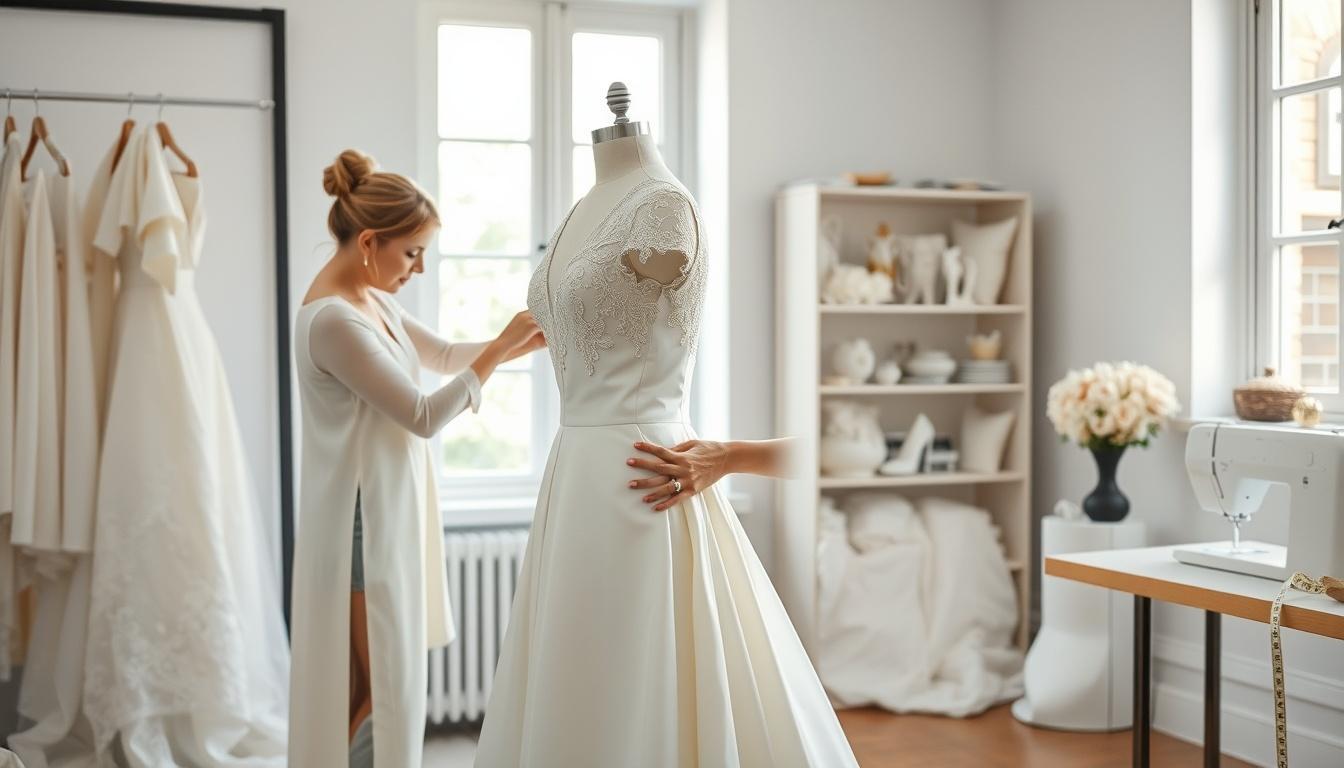
What to Know Before Bridal Alterations
At Stitch & Style, the first step is to look at the garment on the body and assess how it is built. Seams, structure, and available allowances all affect what can be adjusted and how the final result will sit.
For bridal gowns, common work includes hem and train adjustment, bodice and strap refitting, and bustle or fastening changes. Occasion dresses may need shaping, shortening, or refinishing so the fit feels balanced for the event.
A careful fitting plan helps your gown sit beautifully without rushing the process.
Bridal and occasionwear alterations are shaped by the fabric, construction, and event date. That is why every project starts with a detailed review before any final quote is confirmed.
Most projects follow a staged fitting plan with one or two appointments, depending on the garment and the work involved. A clear written scope helps keep the alterations aligned with the agreed design and deadlines.
Because fabrics and finishes vary, matching materials such as lace, buttons, lining, or zippers can only be confirmed after inspection and availability checks. Final fitting and collection are used to review the garment carefully before it leaves the workshop.